Aerial imagery
The rotating-image format presented in the portfolio.
Team BOOMBOX / Light in motion
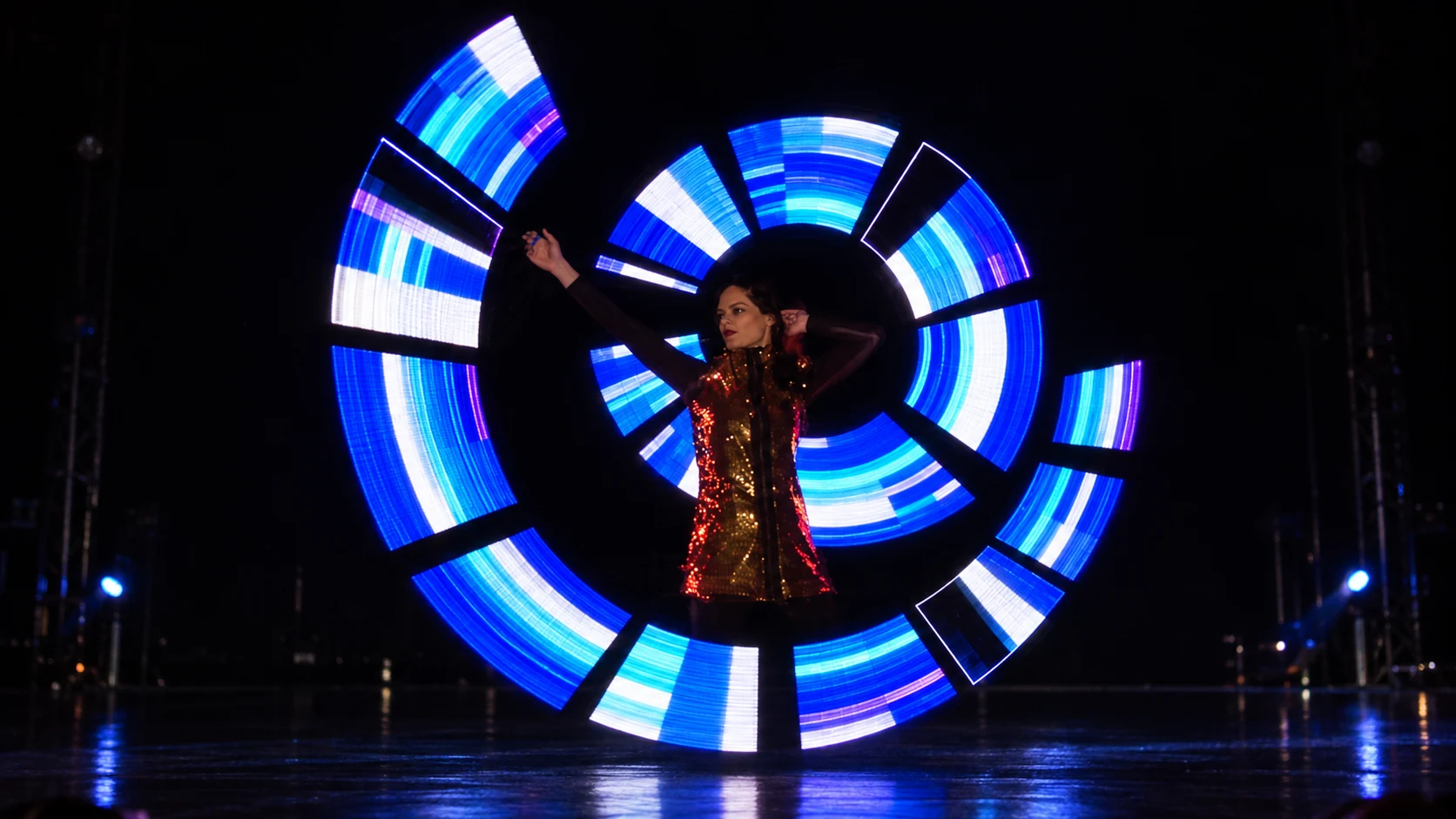
Rotating light draws patterns and images through the air.
The creative approach
The image depends on movement as well as content. Repeated rotations create a visual trail, allowing a compact illuminated object to draw a much larger form in the audience’s view.
Within this format
The rotating-image format presented in the portfolio.
Imagery and abstract light patterns offer different starting points for choreography.
Plan this performance
Image trails are perceived through repeated movement. A graphic that works as a still may need a different scale, contrast or rhythm when carried through the air, so imagery and handling should be explored together.
Should viewers recognise a simple mark, a colour pattern or a sequence of changing images?
Where will the audience see the rotating trail, and what other light or imagery surrounds it?
How does the performer begin, change direction and close the sequence within the available area?
From enquiry to development
Provide the proposed graphics and audience view. A development discussion should include a content-in-motion review, the intended choreography and how the sequence fits the wider programme.
Bring the graphics or visual language, viewing distance and usable movement area. The imagery and motion need to be evaluated together.
Start a conversation
Tell us about the occasion, venue and intended programme. We can discuss a repertoire starting point and the development your project needs.